L-Theanine for Stress: Calm Focus Without Drowsiness
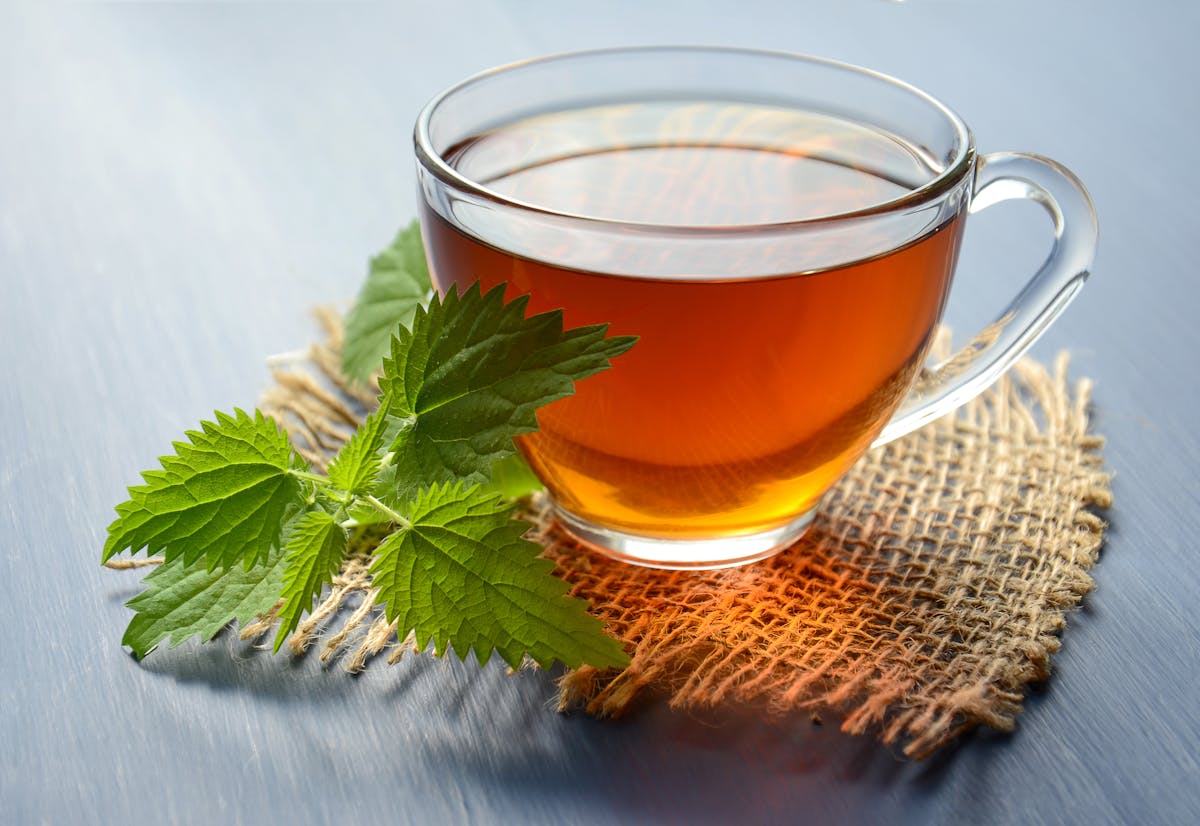
For centuries, Buddhist monks have started their meditation sessions with a cup of green tea. They didn't have EEG machines or clinical trials to explain why. They simply knew that something in the tea helped them settle into a state of quiet, sustained attention — alert but unhurried, focused but not tense.
That something, as modern science has since confirmed, is an amino acid called L-theanine.
L-theanine is one of the rare compounds that genuinely earns the phrase "calm focus." Unlike sedatives that dull your mind, or stimulants that push it into overdrive, L-theanine occupies a middle ground that most people didn't know existed. It promotes relaxation without drowsiness and sharpens attention without anxiety.
It's the reason green tea feels different from coffee — even when the caffeine content is comparable — and it's one of the most well-studied natural compounds for stress relief available today.
In this article, we'll cover what L-theanine actually is, how it changes your brain wave patterns within minutes, what the clinical research shows, the ideal dose for stress and focus, and why it becomes even more effective when paired with adaptogens like ashwagandha and rhodiola.
In this article
What is L-theanine?
L-theanine is a non-essential amino acid found almost exclusively in tea leaves. It comes from Camellia sinensis — the plant that gives us green, black, and white tea.
First identified by Japanese scientists in 1949, it has since become one of the most researched bioactive compounds in functional nutrition. Unlike most amino acids, L-theanine is not used by the body for building proteins. Instead, it crosses the blood-brain barrier directly and influences neurotransmitter activity in the brain.
How it works in the brain
L-theanine increases the production of three key neurotransmitters:
- GABA (gamma-aminobutyric acid) — promotes relaxation
- Serotonin — regulates mood
- Dopamine — supports cognitive function
It also modulates glutamate, the brain's primary excitatory neurotransmitter. This helps prevent the kind of neural overstimulation that manifests as racing thoughts, mental tension, and difficulty unwinding.
What makes it different from other calming supplements
L-theanine does not cause drowsiness. It does not impair reaction time. It does not create dependency or tolerance.
Most sedative compounds work by suppressing neural activity broadly, which is why they make you feel foggy or slow. L-theanine takes a fundamentally different approach: it promotes relaxation by modulating brain activity rather than dampening it.
The result is a mental state that feels calm and clear at the same time.
Why this matters for chronic stress
If your days require focus, decision-making, and presence, a calming supplement that compromises your sharpness isn't solving the problem. Whether you're at work, with your family, or navigating the mental load of modern life — L-theanine addresses the tension without sacrificing the clarity.
Alpha brain waves: the science of calm focus
To understand how L-theanine works, you need to understand a little about brain waves. Your brain produces electrical activity in measurable frequency bands, each associated with a different mental state:
- Beta waves — dominate when you're actively thinking or feeling anxious
- Theta waves — appear during deep relaxation
- Delta waves — the signature of deep sleep
- Alpha waves (8-13 Hz) — correspond to relaxed alertness
What alpha waves feel like
Alpha waves represent the sweet spot between full activation and rest. This is the mental state you experience during meditation, during a walk in nature when your mind is quiet but your senses are open, or when you're working on something engaging and time seems to dissolve.
Your brain is calm, but not checked out.
L-theanine's signature effect
L-theanine's most distinctive effect is its ability to increase alpha brain wave activity. Multiple EEG studies have shown that within 30 to 40 minutes of ingestion, L-theanine produces a measurable shift toward alpha-dominant brain activity.
This shift is particularly pronounced in the occipital and parietal regions associated with attention and sensory processing. It's a clear, reproducible pattern that shows up consistently across studies.
What this means for you
L-theanine gives you access to the mental state that experienced meditators spend years learning to cultivate — reliably, within the span of a lunch break.
For people who struggle to quiet their minds or who simply don't have 30 minutes to sit in silence every morning, L-theanine offers a biochemical shortcut to a calmer, more focused baseline.
L-theanine gives you the mental state of meditation — without having to meditate. Within 40 minutes, it shifts your brain toward the alpha wave pattern associated with relaxed alertness, calm focus, and present-moment awareness.
What the research shows
L-theanine benefits more than just subjective feelings of calm. The clinical evidence is specific, measurable, and consistent. Here are the studies that matter most.
Hidese et al. (2019) — stress reduction over 4 weeks
This randomized, double-blind, placebo-controlled trial tested L-theanine in healthy adults. Participants who received 200mg daily for four weeks showed significant reductions in stress-related symptoms compared to placebo.
Key findings:
- Lower scores on depression measures
- Lower scores on anxiety measures
- Reduced sleep disturbance
The researchers concluded that L-theanine has the potential to promote mental health in the general population, not just clinical anxiety populations.
Nobre et al. (2008) — measurable brain wave changes
This study used EEG to directly measure L-theanine's impact on brain activity. It confirmed that L-theanine significantly increased alpha brain wave activity within 40 minutes of ingestion.
This moved the conversation beyond self-reported outcomes into measurable, reproducible brain physiology.
Kimura et al. (2007) — blunted acute stress response
This study examined L-theanine's effects on the acute stress response. Participants who received L-theanine before a stressful mental arithmetic task showed:
- Reduced heart rate
- Lower salivary immunoglobulin A responses — a biomarker of acute psychological stress
L-theanine didn't just make people feel calmer; it measurably reduced how their bodies responded to stress.
The big picture
Taken together, L-theanine works on multiple levels: it shifts brain wave patterns toward calm focus, reduces subjective stress symptoms over time, and blunts the body's acute stress response in real time.
For a comprehensive look at how L-theanine fits into a broader cortisol management strategy, see our guide to the best supplements to lower cortisol.

How to use L-theanine
One of the most practical things about L-theanine is how forgiving it is. Unlike supplements that require precise timing or weeks of loading, L-theanine is effective almost immediately and flexible in how you use it.
Dose
The clinically supported range is 200-400mg per day. Most studies showing clear benefits for stress reduction and alpha wave enhancement used doses in the 200mg range.
Some research on cognitive performance and stress resilience used up to 400mg. For most people, 200-300mg daily is the effective sweet spot — enough to produce meaningful effects without diminishing returns.
Timing
L-theanine can be taken at any time of day. Two solid approaches:
- Morning dose — promotes calm, focused energy to start the day
- Split dose — half in the morning, half in the early afternoon — maintains steady calm focus and smooths out the mid-afternoon stress spike
Because L-theanine is not sedating, it won't interfere with productivity regardless of when you take it.
Food
L-theanine can be taken with or without food. Absorption is efficient either way.
Onset
This is where L-theanine stands apart from other supplements. While adaptogens like ashwagandha and rhodiola build their effects over weeks, L-theanine produces noticeable effects the same day — typically within 30 to 40 minutes.
You don't need to wait a month to know if it's working. At the same time, research suggests that L-theanine's benefits also accumulate with daily use, meaning the longer you take it, the more stable your baseline calm becomes.
Safety
L-theanine has an excellent safety profile. It is well tolerated for daily long-term use with no tolerance, dependence, or withdrawal effects.
No significant adverse effects have been reported in clinical trials, even at doses above 400mg. Humans have been consuming it in tea for thousands of years.
L-theanine is one of the few supplements with both immediate and cumulative benefits. You'll feel the calm focus within 40 minutes, and the effects deepen with consistent daily use over weeks.
Pairing L-theanine with adaptogens
L-theanine is highly effective on its own — but its real potential emerges when paired with adaptogens. Chronic stress affects your hormones, neurotransmitters, energy, and cognition simultaneously.
The most effective approach uses multiple compounds that work through different biological pathways at once.
L-theanine + ashwagandha: calm body, calm mind
Ashwagandha directly modulates the HPA axis and has been shown to lower serum cortisol by up to 30% over eight weeks. L-theanine works at the brain wave and neurotransmitter level, promoting alpha-dominant mental states.
Together, they address stress from both ends:
- Ashwagandha quiets the hormonal alarm system
- L-theanine calms the mental experience of stress
The result is a deeper sense of calm than either ingredient achieves alone — without sedation or cognitive compromise.
L-theanine + rhodiola: focused energy without jitters
Rhodiola rosea shines in mental stamina, fatigue resistance, and focus under pressure. Where L-theanine smooths and calms neural activity, rhodiola energizes and sharpens it.
The combination produces a state of focused, resilient energy — alert without anxious, steady without flat. For people who experience both anxiety and fatigue (a hallmark of chronic cortisol dysregulation), this pairing covers both poles.
For a deeper comparison, see our full breakdown of ashwagandha vs. rhodiola.
Why the combination works
Chronic stress operates through multiple pathways simultaneously. A single ingredient can't address all of them:
- Cortisol floods your system — ashwagandha addresses this
- Your brain struggles to maintain calm — L-theanine addresses this
- Your energy depletes over time — rhodiola addresses this
Together, they create a comprehensive foundation — each ingredient doing what it does best.
Rounding out the formula
Adding magnesium bisglycinate and vitamin D3 completes the picture. Magnesium supports the nervous system, and vitamin D3 supports mood stability.
This isn't a random stack of trendy supplements — it's a deliberate combination of compounds with distinct mechanisms. If you're interested in weaving these ingredients into a daily practice, our cortisol reset routine walks through the structure step by step.
The most effective stress support doesn't rely on a single ingredient. L-theanine calms the mind, ashwagandha calms the hormones, and rhodiola restores the energy that chronic stress depletes. Together, they address the full spectrum of what stress does to your body and brain.
Hormoona includes 300mg of L-theanine per stick — alongside ashwagandha, rhodiola, magnesium, and vitamin D3 for full-spectrum cortisol support.
Try Hormoona →Sources
- Hidese, S. et al. (2019). Effects of L-theanine administration on stress-related symptoms. Nutrients, 11(10), 2362.
- Nobre, A.C. et al. (2008). L-theanine, a natural constituent in tea, and its effect on mental state. Asia Pacific Journal of Clinical Nutrition, 17(S1), 167-168.
- Kimura, K. et al. (2007). L-theanine reduces psychological and physiological stress responses. Biological Psychology, 74(1), 39-45.
- Juneja, L.R. et al. (1999). L-theanine — a unique amino acid of green tea. Trends in Food Science & Technology, 10(6-7), 199-204.
- Owen, G.N. et al. (2008). The combined effects of L-theanine and caffeine on cognitive performance. Nutritional Neuroscience, 11(4), 193-198.